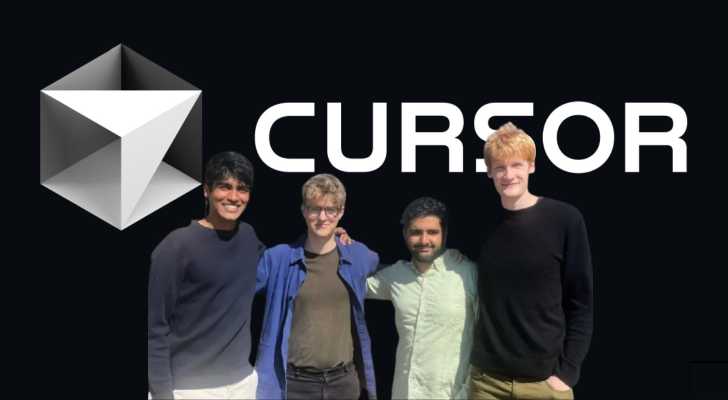
📌 MAROKO133 Breaking crypto: FTX Estate Sold Cursor Stake for $200K: It’s Now Wort
The FTX bankruptcy estate sold a 5% stake in AI coding startup Cursor for $200,000 in April 2023.
That same stake, following SpaceX’s agreement to acquire Cursor at a $60 billion valuation, is now worth approximately $3 billion.
A 15,000x gap realized by whoever bought it from the estate rather than by the creditors the estate existed to protect.
The core question is whether distressed asset liquidation under bankruptcy constraints can ever adequately protect creditor interests in high-velocity technology markets, and what the answer means for every future estate forced to sell illiquid startup equity at bear market prices under cash-conversion pressure.
- Sale price: FTX bankruptcy estate sold its 5% Cursor stake for $200,000 in April 2023 – the same price Alameda Research originally paid in April 2022
- Current value: That stake is worth approximately $3 billion at SpaceX’s $60 billion Cursor acquisition valuation announced April 21, 2026
- Return gap: 15,000x difference between realized recovery and current mark – one of the largest single missed recoveries in crypto bankruptcy history
- Original investment: Alameda Research invested $200,000 in Anysphere (Cursor’s parent company) at a $4 million valuation – the estate sold at cost with zero appreciation captured
- SBF’s prison argument: Sam Bankman-Fried, serving a 25-year federal sentence, projected in February 2026 that FTX’s net asset value would have reached $78 billion had the estate held assets through recovery
- Watch item: SpaceX must decide on full $60 billion Cursor acquisition later in 2026 or trigger its $10 billion breakup fee – the outcome sets the final mark on what creditors actually forfeited
Discover: The best crypto to diversify your portfolio with
How a $200,000 Fire Sale Became a $3 Billion Creditor Recovery Miss
Alameda Research entered Anysphere’s seed round in April 2022 at a $4 million valuation, securing roughly 5% of the company for $200,000.
Seven months later, FTX collapsed. By April 2023, John J. Ray III’s administration was under intense pressure to convert volatile venture holdings into cash, and the Cursor stake was liquidated at exactly what Alameda paid, capturing zero appreciation from the seed entry.
That framing matters. This was not a distressed token sold below water. It was an early equity position in a pre-revenue AI startup, sold at cost into a bear market by administrators operating on a cash-conversion mandate rather than a value-maximization one.
Cursor launched its AI coding product in early 2023, the same quarter the estate sold the stake.
The 2025-2026 AI boom did the rest. Cursor now powers 67% of Fortune 500 companies, has crossed $1 billion in annualized revenue, and sits at the center of Elon Musk’s push to close xAI’s gap with OpenAI and Anthropic on AI coding tools.
SpaceX holds the right to acquire Cursor outright for $60 billion later this year, or pay a $10 billion breakup fee if its planned $2 trillion IPO timeline forces a delay.
Experts note the $3 billion figure assumes an unchanged 5% stake at SpaceX’s price, dilution from Cursor’s separate $900 million funding round at a $9 billion valuation could compress the actual number. Even discounted significantly, the creditor recovery miss is structurally damning.
Discover: The best pre-launch token sales
What FTX Forced Cursor Sale Actually Exposes About Bankruptcy Administration in Tech Markets
Bankman-Fried’s argument from prison, that the estate destroyed tens of billions in value through forced selling, now has its single clearest data point.
His February 2026 projection of a $78 billion net asset value, had positions been held, looked aggressive at the time. The Cursor number alone adds $3 billion of supporting evidence in one line item.
FTX customers were made whole in dollar terms under the distribution plan, receiving claim values plus interest.
What the creditor recovery framework did not, and structurally could not, preserve was the upside from what those assets became.
That is the honest tension at the center of distressed asset administration: dollar recovery and value recovery are not the same thing, and bankruptcy law is built around the former.
The Cursor sale is likely to feature prominently in Bankman-Fried’s continued campaign from prison, and in his parents’ public advocacy for a pardon.
The post FTX Estate Sold Cursor Stake for $200K: It’s Now Worth $3 Billion appeared first on Cryptonews.
🔗 Sumber: cryptonews.com
📌 MAROKO133 Hot crypto: Nokia’s Fiber Optic Bet Is Paying Off as AI Hunger Lifts E
Nokia beat profit expectations in Q1 2026, and the reason has nothing to do with phones. The Finnish company’s optical fiber business has become the quiet engine behind its strongest quarter in years.
Comparable operating profit jumped 54% to €281 million, well above analyst estimates. Shares rose roughly 7% in Helsinki, reaching levels not seen since 2010. The company’s stock price is up by a staggering 63% in 2026.
The Fiber Behind the AI Boom
The headlines say “AI revived Nokia,” but the earnings tell a more specific story. Inside Nokia’s Network Infrastructure segment, the Optical Networks unit grew 20% in the quarter.
This single business line, which builds the high-speed fiber systems connecting AI data centers, delivered far more growth than any other part of the company.
The rest of the portfolio tells a different story. IP Networks grew 3%. Fixed Networks shrank 13%. The legacy mobile infrastructure business, once Nokia’s identity, managed just 3% growth.
What changed is who Nokia sells to. Cloud giants like Amazon, Google, and Microsoft are building massive AI training facilities, and those facilities need fiber optic cables to move data at scale.
Nokia booked €1 billion ($1.17B) in new orders from these hyperscaler customers in Q1 alone. Sales to AI and cloud buyers now account for 8% of the company’s total revenue, up 49% from a year ago.
A Bigger Bet on Optical
Nokia is leaning into the momentum. The company raised its 2026 growth forecast for Network Infrastructure to 12-14%, up from 6-8%.
It now expects the AI and cloud market it serves to grow at 27% annually through 2028, nearly double its November estimate.
“We are increasing our growth assumption for Optical and IP Networks and we are investing to capture accelerating demand from AI & Cloud customers,” stated Justin Hotard, President and CEO.
The Infinera acquisition, completed in early 2025, gave Nokia a larger footprint in coherent optical transport. That deal is now showing up in wider margins and stronger order books.
Nokia’s comeback is real. It just has less to do with AI hype and more to do with the fiber optic cables that make AI possible.
The post Nokia’s Fiber Optic Bet Is Paying Off as AI Hunger Lifts Earnings appeared first on BeInCrypto.
🔗 Sumber: www.beincrypto.com
🤖 Catatan MAROKO133
Artikel ini adalah rangkuman otomatis dari beberapa sumber terpercaya. Kami pilih topik yang sedang tren agar kamu selalu update tanpa ketinggalan.
✅ Update berikutnya dalam 30 menit — tema random menanti!
