📌 MAROKO133 Update ai: New ‘ultra stainless steel’ hits 1700 mV to slash green hyd
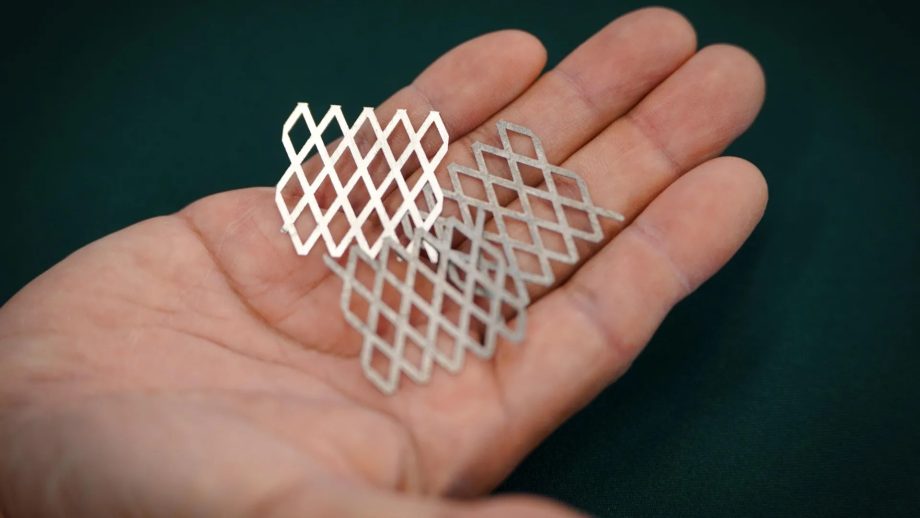
A materials science team at the University of Hong Kong has developed a steel alloy that survives the extreme electrochemical conditions of seawater electrolysis — the process used to generate green hydrogen from ocean water — through a corrosion-resistance mechanism that the researchers themselves describe as previously unexplained.
The material, which the team calls “ultra stainless steel,” outperforms conventional stainless steel by a significant margin and could serve as a lower-cost substitute for titanium components in hydrogen production systems.
A dual-barrier effect
Standard stainless steel derives its corrosion resistance from a thin passive oxide layer — typically chromium oxide — that forms spontaneously on the surface and blocks further oxidation. In seawater electrolysis environments, however, that layer breaks down under the combined assault of chloride ions and high anodic voltages, leading to pitting corrosion and eventual structural failure.
The University of Hong Kong team engineered their alloy with a modified composition that triggers two distinct protective responses simultaneously. The first is a conventional passive oxide layer; the second is a separate, dynamically reinforced barrier that activates specifically under the electrochemical stress conditions present during electrolysis. The researchers report that this secondary mechanism was not anticipated by existing corrosion theory, which is why they characterized it as something that “cannot be explained” by conventional models.
The precise alloy composition has not been fully disclosed in publicly available summaries, but the research indicates the double-protection system gives the material measurably superior chloride tolerance compared to standard austenitic or ferritic stainless steels used in industrial electrolyzer hardware today.
Why titanium replacement matters
Green hydrogen — produced by splitting water molecules using renewable electricity — is considered one of the more viable long-term pathways for decarbonizing heavy industry and long-haul transport. The electrolyzer systems that perform this splitting, particularly those operating with seawater rather than purified freshwater, currently rely on titanium for components that face the harshest electrochemical exposure.
Titanium offers excellent corrosion resistance and biocompatibility, but it is expensive to extract, refine, and machine. Steel, by contrast, is one of the most produced materials on earth, with established global supply chains and fabrication infrastructure. If the ultra stainless steel can match titanium’s durability in real-world electrolyzer service — a condition that lab results alone cannot fully confirm — the cost reduction for seawater electrolysis systems could be substantial.
The caveat is that laboratory corrosion testing, even rigorous electrochemical characterization, does not always predict long-term performance under industrial operating cycles, thermal fluctuations, and biological fouling. Independent validation at pilot scale will be a necessary step before any commercial electrolyzer manufacturer would qualify the material for production use.
From alloy design to industrial qualification
The path from novel alloy to deployed hardware involves several engineering stages: reproducible manufacturing at industrial casting volumes, mechanical property verification under cyclic stress, weldability assessment, and compatibility testing with membrane and electrolyte chemistries used in specific electrolyzer architectures such as proton exchange membrane (PEM) and alkaline designs.
None of those stages are trivial, and the University of Hong Kong team has not publicly claimed commercial readiness. What the research does establish is a new design principle — the deliberate engineering of a secondary electrochemical defense layer — that may inform alloy development beyond this specific application.
If the dual-barrier mechanism can be reproduced and scaled, it represents a credible materials strategy for reducing the hardware cost of seawater electrolysis, one of the remaining bottlenecks in making green hydrogen economically competitive with fossil-derived alternatives.
🔗 Sumber: interestingengineering.com
📌 MAROKO133 Update ai: ChatGPT Is Saying VWeird Things in Chinese Edisi Jam 23:17
If you thought English-language ChatGPT-prose was annoying, just wait until you get a load of its conversational habits in Chinese.
A fascinating piece of reporting by Wired took a look at how ChatGPT handles Chinese, the global language with the highest number of native speakers, according to the Language School at Middlebury College.
One of its go-to tics, the publication reports, is to answer questions with “我会稳稳地接住你,” which literally translates to “I will catch you steadily,” a phrase signalling willingness to talk about a person’s feelings (as Wired’s Zeyi Yang notes, a more flowerly translation could be “I’ll hold you steadily through whatever comes,” though the sentiment is apparently irritating to Chinese speakers either way.)
At other times, ChatGPT will tell its Chinese users “砍一刀,” which means either “help me cut it once,” or “slash the price,” an obnoxious bit of ad copy parroted by Chinese eCommerce platform Pinduoduo, Wired notes.
The odd mannerisms are so ubiquitous that they’ve become a meme among Chinese netizens, with some depicting ChatGPT as a giant inflatable airbag placed to break someone’s fall — catching them steadily.
The problem, Wired observes, may come down to a phenomenon called “mode collapse,” a fundamental bias tracing back to the people training large language models (LLMs). Basically, the idea goes that when human data annotators comb through text to train AI chatbots, they unknowingly favor familiar turns-of-phrase over more foreign-sounding sentences.
After an LLM like ChatGPT is trained, it becomes difficult to force it to “unlearn” certain phrases. While AI developers can reinforce the usage of a particular response — “I will catch you steadily” may be a great answer in a particular situation — accounting for range and quantity is a different beast altogether.
“We don’t know how to say: ‘this is good writing, but if we do this good writing thing 10 times, then it’s no longer good writing,” Max Spero, cofounder and CEO of AI-writing detector Pangram, told Wired.
Whatever the cause, it’s nice to know when English-speakers agree on something with our Chinese brethren, even if it’s just a universal hatred for ChatGPT’s inane babble.
More on ChatGPT: Even After Two Massacres, OpenAI Still Hasn’t Stopped ChatGPT From Helping Plan School Shootings
The post ChatGPT Is Saying VWeird Things in Chinese appeared first on Futurism.
🔗 Sumber: futurism.com
🤖 Catatan MAROKO133
Artikel ini adalah rangkuman otomatis dari beberapa sumber terpercaya. Kami pilih topik yang sedang tren agar kamu selalu update tanpa ketinggalan.
✅ Update berikutnya dalam 30 menit — tema random menanti!
