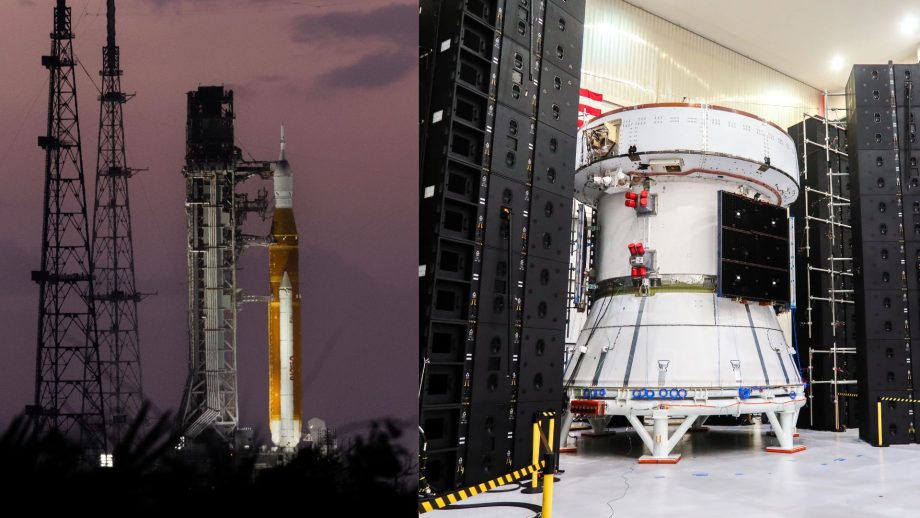
📌 MAROKO133 Hot ai: NASA’s Artemis III to rehearse Orion spacecraft docking with S
NASA is overhauling its lunar exploration timeline with a new Earth-orbit mission that will serve as a full-scale rehearsal for future Moon landings. Instead of sending astronauts toward lunar orbit immediately, the agency plans to use Artemis III to stress-test spacecraft operations, docking procedures, and crew coordination much closer to home.
The mission will place Orion astronauts in low Earth orbit alongside next-generation lunar lander systems under development by Blue Origin and SpaceX. NASA believes the approach will expose technical and operational issues earlier, giving engineers more time to resolve problems before astronauts attempt surface missions later in the decade.
Orbit mission takes shape
NASA introduced the revised Artemis III concept earlier this year as part of a broader effort to strengthen mission reliability. Agency officials now view the flight as a systems integration exercise rather than a traditional deep-space mission.
The four-person crew will launch aboard the Space Launch System rocket from Kennedy Space Center in Florida. After reaching orbit, Orion will maneuver using its European-built service module and begin a series of proximity operations with commercial lander pathfinders.
NASA expects the mission to generate valuable data on spacecraft coordination, crew timelines, and orbital traffic management. Engineers also want to understand how astronauts interact with multiple vehicles during extended missions.
Jeremy Parsons, Moon to Mars acting assistant deputy administrator, said the mission introduces a new level of operational complexity for the Artemis campaign.
“We’re integrating more partners and interrelated operations into this mission by design,” Parsons said. He noted that NASA wants crews and flight teams to gain operational experience before committing astronauts to lunar surface expeditions.
Hardware changes underway
The updated mission architecture also changes how the SLS rocket will fly. NASA will remove the interim cryogenic propulsion stage used on earlier Artemis missions and replace it with a structural spacer. The hardware will mimic the upper stage’s dimensions and weight without providing propulsion.
Manufacturing work has already started at NASA’s Marshall Space Flight Center in Alabama. Teams are machining structural rings and barrel sections ahead of welding and final assembly.
NASA selected low Earth orbit for the mission because it provides more flexibility for launch timing. That flexibility becomes increasingly important when coordinating Orion, commercial landers, and supporting systems from multiple providers.
Expanding mission objectives
The agency plans to push Orion further than previous crewed test flights. Astronauts will remain aboard longer than the Artemis II crew and conduct the spacecraft’s first docking demonstrations in orbit.
NASA also plans to evaluate upgraded heat shield technology during reentry. Engineers want the changes to support a wider range of landing conditions on later deep-space missions.
Several mission elements remain under review. NASA continues to study whether astronauts could enter one of the lander test vehicles during the flight. The agency is also assessing opportunities for CubeSat deployments and spacesuit compatibility testing using Axiom Space’s lunar suit systems.
At the same time, NASA has started seeking industry proposals for alternative communications support because the mission will operate without the Deep Space Network.
Rather than focusing only on reaching the Moon quickly, NASA now appears determined to build a more stable operational framework for long-duration exploration. Artemis III will likely become the proving ground for how the agency, commercial partners, and astronauts work together before the next phase of lunar missions begins.
🔗 Sumber: interestingengineering.com
📌 MAROKO133 Breaking ai: Software Engineers Say They’re Losing the Ability to Code
Even for employees who’ve managed to hold onto their jobs, AI is having a very real impact at work.
As corporations boast about how much they’re investing in automation, the reality is that many employers are practically forcing the tech on their workers. Nowhere has that been more visible than software engineers, with companies including Meta even introducing “leaderboards” to show which employees are burning the most AI tokens in real-time.
But it turns out that embrace of AI by programmers may come at a steep price. Many are speaking out, saying they now simply review AI-generated code instead of writing it themselves — a rote task, it turns out, that’s an important part of keeping their technical skills sharp.
Similar complaints are proliferating across social media, and 404 Media talked to more developers who confirmed the problem.
“I had some issues where I forgot how to implement a Laravel API and it scared the s**t out of me,” one engineer, who requested to remain anonymous, told 404. “I went to university for this, I’ve been a software engineer for many years now and it feels like I am back before I ever wrote a single line of code.”
Not all companies mandate the use of AI in the workplace, but the tools are seductive regardless. Another anonymous software engineer told 404 that while he wasn’t outright forced to use LLMs, he and his colleagues were discreetly given access to Cursor for coding and found themselves using it regularly. Sure, he found, AI coding tools can save time and effort — but if they undermine core intellectual skills required to architect larger projects, the problem is soon going to come home to roost for employers.
“It’s making me dumber for sure,” the same developer told 404. “It’s like when we got cellphones and stopped remembering phone numbers, but it’s grown to me mentally outsourcing ‘thinking’ in general. I feel my critical thinking and ability to sit and reason about a problem or a design has degraded because the all-knowing-dalai-llama is just a question away from giving me his take.”
A growing body of research supports the idea that our critical thinking skills are being sanded down by AI use. With everyone from veteran software coders to students morphing into mindless zombies, the apocalypse may come at the hands of AI, after all.
More on the impacts of AI: AI Is Destroying a Generation of Students
The post Software Engineers Say They’re Losing the Ability to Code Now That AI Does It for Them appeared first on Futurism.
🔗 Sumber: futurism.com
🤖 Catatan MAROKO133
Artikel ini adalah rangkuman otomatis dari beberapa sumber terpercaya. Kami pilih topik yang sedang tren agar kamu selalu update tanpa ketinggalan.
✅ Update berikutnya dalam 30 menit — tema random menanti!
