📌 MAROKO133 Update ai: Nurses, patients and Cornell engineers collaborate to desig
A Cornell Tech-led research team spent 14 weeks exploring how healthcare robots change when hospital staff, patients, artists, engineers, and craftspeople help design them together. The study found that user-driven collaboration produced more practical and human-centered robots than systems developed in isolation. The findings were presented at the 2026 ACM CHI Conference on Human Factors in Computing Systems.
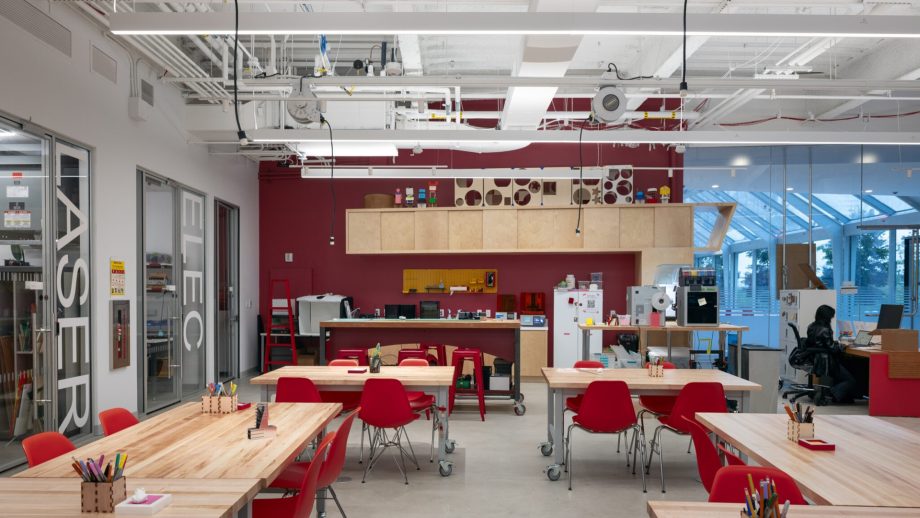
Led by Angelique Taylor, assistant professor at Cornell Tech, the study documented a co-design project where 22 participants—including nurses, doctors, patients, artists, engineers, and craftsmen—met weekly at Cornell Tech’s MakerLAB over three months. Their mission: to imagine and physically build robots tailored for real-world healthcare settings.
Designing for real pain points
Rather than beginning with a list of features, the team started by asking what frustrates healthcare workers and what stresses patients. This approach turned the usual design process on its head.
Taylor noted that while healthcare facilities often struggle with patient management, there has been little research into how robot design could directly solve the daily challenges faced by staff and patients.
The MakerLAB environment was central. Co-author Niti Parikh, director of MakerLABs at Cornell Tech, described digital fabrication as an “instrument of thought,” enabling non-technical participants to move from passive observers to active contributors in shaping complex AI tools.
Three settings, three problems
Teams focused on three healthcare settings: an emergency department, a sleep disorder clinic, and a long-term rehabilitation facility. Through brainstorming, cardboard mockups, and full-size prototypes, practical challenges emerged that interviews alone never revealed. Building life-size robots highlighted real-world issues—like hallway width, patient comfort, noise, hygiene, and safety—that sketches and interviews often miss.
In the ER, a bear-shaped robot was designed to deliver medical kits to patient rooms ahead of doctors, reducing pressure on nurses. A sleep clinic team built a gentle, concierge-style robot with calming lights to guide patients through nighttime procedures. For long-term rehab, participants created a robot offering entertainment, schedules, and social connection to help residents feel less isolated.
Researchers found the robots worked best when handling repetitive, non-clinical tasks—freeing up human staff for the empathy-driven, judgment-based work only people can do.
Breaking down barriers
The MakerLAB’s neutral, hierarchy-free atmosphere encouraged experimentation and made it safe to make mistakes. This psychological safety helped non-technical participants gain confidence and contribute meaningfully as their understanding of robotics grew.
Artists shaped the robots’ look and feel, residents flagged when machines might overstep, and healthcare workers spotlighted workflow issues tech often misses.
The team calls the result a framework for “considerate embodied AI”—robots tuned to social norms, spatial constraints, and human needs, not just efficiency. Physical prototypes became a shared language between caregivers and engineers. As hospitals face staffing shortages and burnout, the study argues those closest to the problems should help build the solutions.
🔗 Sumber: interestingengineering.com
📌 MAROKO133 Hot ai: Electric Company Says It’s Cutting Off an Entire Town So It Ca
The data center scramble feeding off the AI boom is no longer just raising utility prices for nearby civilians — it’s rerouting their utilities entirely.
Bombshell new reporting by Fortune details the plight of residents in Lake Tahoe, on the border of California and Nevada, whose electrical supplier is cutting them off in order to supply more energy to nearby data centers.
According to the magazine, Nevada-based utility company NV Energy gave residents notice that they’ll stop providing power after May of 2027. That leaves California-based energy transmission company Liberty Utilities with a major gap in its supply chain, because NV Energy supplied 75 percent of its total power.
To understand exactly what’s going on, we have to untangle the mess of transmission lines and energy suppliers that makes up the US electrical grid. Taking a look on Open Infrastructure Map, an open source tool for mapping the world’s utility infrastructure, it’s clear NV Energy supplies the bulk of residents on both the California and Nevada side of Lake Tahoe. In all, Fortune reports the decision could leave as many as 49,000 residents in the dark — literally.
“It’s like we don’t exist,” Danielle Hughes, a Lake Tahoe resident and supervisor with the California Energy Commission’s Efficiency Division, told Fortune.
Because of the topsy-turvy web of energy concerns overseeing various chunks of the region, it would cost “hundreds of millions of dollars” to connect Liberty Utilities with a new energy provider on the California side, Liberty president Eric Schwarzrock told the magazine.
The data center boom is rapidly sucking Nevada’s power grid dry, with an estimated 22 percent of the state’s total electricity generation capacity going toward the behemoth computing centers in 2024. According to the Desert Research Institute, that figure could rise to as much as 35 percent by 2030 if current trends continue.
Responding to the outcry by local residents, a spokesperson for NV Energy told Fortune that the decision to uncouple from Lake Tahoe was a “planned transition for many years, not a reaction to recent developments.”
Given that residents now have less than a year to secure a new electrical supplier, though, it’s hard to imagine why the announcement was left for the last minute — and who will ultimately pay the price.
More on data centers: New Data Center Equivalent to Setting Off 23 Nuclear Bombs Per Day, Professor Finds
The post Electric Company Says It’s Cutting Off an Entire Town So It Can Sell All Its Power to Data Centers appeared first on Futurism.
🔗 Sumber: futurism.com
🤖 Catatan MAROKO133
Artikel ini adalah rangkuman otomatis dari beberapa sumber terpercaya. Kami pilih topik yang sedang tren agar kamu selalu update tanpa ketinggalan.
✅ Update berikutnya dalam 30 menit — tema random menanti!
