📌 MAROKO133 Breaking ai: Survivors of Swiss ski resort fire treated with skin grow
Survivors of Switzerland’s devastating Crans-Montana fire disaster who suffered severe burns are being treated with advanced lab-grown skin grafts, developed using their own cells to improve healing and recovery.
The blaze at the Le Constellation bar in the ski-resort town broke out during New Year celebrations on January 1, 2026. It claimed the lives of 40 people and injured another 119.
Between 80 and 100 survivors suffered severe burns, many covering more than 60 percent of their bodies. Such extensive injuries pose complex medical challenges and require years of surgeries and rehabilitation.
Now, doctors are turning to a novel solution to help some of the most seriously injured patients transferred to Zurich. The approach, developed through decades of research, uses living skin grown from the patients’ own cells.
Treating severe burns
The skin graft, which behaves like natural human skin, was developed by scientists at the University of Zurich (UZH). One of the researchers, biotechnologist Daniela Marino, PhD, later co-founded the spin-off company Cutiss in 2017, to bring the solution, known as denovoSkin, into clinical use.
Unlike traditional split-thickness grafts, which rely on thin layers of donated skin and often result in tight scarring, the denovoSkin graft is elastic and capable of growing with the patient.
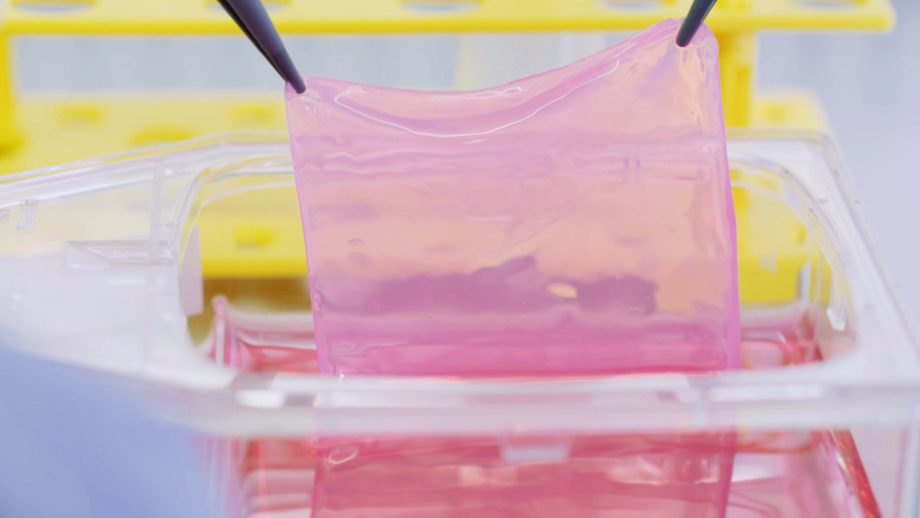
“We developed a living human skin tissue graft that is cultivated in the laboratory from a small skin biopsy the size of a post-stamp taken from the patient,” Marino, now Cutiss’ CEO, said. “The key point is that it is a personalized bilayer graft.”
Credit: CUTISS
Because the graft is made entirely from a patient’s own cells, the risk of rejection is effectively eliminated. This, in turn, reduces complications during healing.
“So far, long-term clinical data in both burns and reconstructive surgery, such as scar revisions and plastic surgery, show that the bilayer skin grafts safely close wounds and spare healthy skin for the patients while improving scar quality when compared to standard of care,” Marino revealed.
The technology now allows the company to produce several lab-grown skin grafts of up to eight square inches (50 square centimeters) each, within a four-week timeframe.
Hope for survivors
The University Hospital Zurich confirmed that, in selected cases, biopsies from the Crans-Montana patients were sent to Cutiss to produce denovoSkin grafts. As of January 2, 13 patients are being treated at the hospital.
According to Cutiss, long-term clinical data shows that the bilayer graft safely closes wounds, reduces the need for additional donor skin and improves scar quality compared with current standard care.
Credit: CUTISS
The treatment is now in late-stage clinical development. A Phase 3 trial launched in spring 2025 is enrolling adult and adolescent burn patients across 20 burn centers in eight European countries and Switzerland, including Zurich.
At the same time, the final-stage trial aims to confirm the treatment’s safety and effectiveness on a larger scale. This is a key step toward regulatory approval and wider clinical use. Phase 2 data have already been published.
“Our product is an advanced therapy, and now we need Phase-3 data before we can proceed with the full regulatory approval process in different geographies, including Switzerland,” Marino concluded in a press release.
🔗 Sumber: interestingengineering.com
📌 MAROKO133 Breaking ai: Survivors of Swiss ski resort fire treated with skin grow
Survivors of Switzerland’s devastating Crans-Montana fire disaster who suffered severe burns are being treated with advanced lab-grown skin grafts, developed using their own cells to improve healing and recovery.
The blaze at the Le Constellation bar in the ski-resort town broke out during New Year celebrations on January 1, 2026. It claimed the lives of 40 people and injured another 119.
Between 80 and 100 survivors suffered severe burns, many covering more than 60 percent of their bodies. Such extensive injuries pose complex medical challenges and require years of surgeries and rehabilitation.
Now, doctors are turning to a novel solution to help some of the most seriously injured patients transferred to Zurich. The approach, developed through decades of research, uses living skin grown from the patients’ own cells.
Treating severe burns
The skin graft, which behaves like natural human skin, was developed by scientists at the University of Zurich (UZH). One of the researchers, biotechnologist Daniela Marino, PhD, later co-founded the spin-off company Cutiss in 2017, to bring the solution, known as denovoSkin, into clinical use.
Unlike traditional split-thickness grafts, which rely on thin layers of donated skin and often result in tight scarring, the denovoSkin graft is elastic and capable of growing with the patient.
“We developed a living human skin tissue graft that is cultivated in the laboratory from a small skin biopsy the size of a post-stamp taken from the patient,” Marino, now Cutiss’ CEO, said. “The key point is that it is a personalized bilayer graft.”
Credit: CUTISS
Because the graft is made entirely from a patient’s own cells, the risk of rejection is effectively eliminated. This, in turn, reduces complications during healing.
“So far, long-term clinical data in both burns and reconstructive surgery, such as scar revisions and plastic surgery, show that the bilayer skin grafts safely close wounds and spare healthy skin for the patients while improving scar quality when compared to standard of care,” Marino revealed.
The technology now allows the company to produce several lab-grown skin grafts of up to eight square inches (50 square centimeters) each, within a four-week timeframe.
Hope for survivors
The University Hospital Zurich confirmed that, in selected cases, biopsies from the Crans-Montana patients were sent to Cutiss to produce denovoSkin grafts. As of January 2, 13 patients are being treated at the hospital.
According to Cutiss, long-term clinical data shows that the bilayer graft safely closes wounds, reduces the need for additional donor skin and improves scar quality compared with current standard care.
Credit: CUTISS
The treatment is now in late-stage clinical development. A Phase 3 trial launched in spring 2025 is enrolling adult and adolescent burn patients across 20 burn centers in eight European countries and Switzerland, including Zurich.
At the same time, the final-stage trial aims to confirm the treatment’s safety and effectiveness on a larger scale. This is a key step toward regulatory approval and wider clinical use. Phase 2 data have already been published.
“Our product is an advanced therapy, and now we need Phase-3 data before we can proceed with the full regulatory approval process in different geographies, including Switzerland,” Marino concluded in a press release.
🔗 Sumber: interestingengineering.com
🤖 Catatan MAROKO133
Artikel ini adalah rangkuman otomatis dari beberapa sumber terpercaya. Kami pilih topik yang sedang tren agar kamu selalu update tanpa ketinggalan.
✅ Update berikutnya dalam 30 menit — tema random menanti!
